

What Homeowners Need to Know About Ground Faults
Your home’s electrical system should be quiet, steady and invisible, but when something interrupts that flow, like a ground fault, it doesn’t just flip a breaker. It’s warning you that something isn’t safe. Ground faults don’t fix themselves, and they aren’t always obvious. At Potts Electric, in St. Louis, MO, we help homeowners spot these issues early so small concerns don’t turn into large repairs. Let’s walk through what’s really happening when a ground fault strikes and why it matters more than most people think.
What a Ground Fault Really Means
A ground fault happens when electricity moves in a direction it shouldn’t. Instead of flowing along the circuit wires, it escapes and takes a shortcut to the ground. That might happen through water, a frayed wire or a person holding a damaged appliance. The flow suddenly shifts, and the circuit breaker or GFCI outlet reacts fast. That reaction is what keeps you safe, but it’s not the whole story.
In older homes, ground faults can point to aging insulation around wires or junction boxes that weren’t sealed properly. In newer homes, it could mean a specific appliance or device isn’t wired properly. Either way, the system is trying to protect you, and that trip is the signal.
You might notice it when you plug in a vacuum, and the outlet clicks off, or when rainwater seeps in near an outdoor outlet. If it happens more than once in the same spot, it’s worth getting checked. A single event might be a one-off, but repeated ground faults are usually trying to tell you something’s wrong in the wiring or the environment around it.
Where They Happen Most Often
Bathrooms and kitchens get most of the attention when it comes to ground faults, and for good reason. They mix water with plugged-in appliances, like hair dryers, blenders, and toasters. One spilled drink or sink splashes can trigger a trip in a GFCI outlet. That’s exactly what those outlets are designed for. They shut things down fast when electricity doesn’t flow where it should.
Outdoor areas come next. Think of string lights, sump pumps, holiday decorations or tools plugged in near damp grass. Extension cords running across a wet patio or outlet covers left open in the rain create the perfect conditions for a ground fault. You might not see damage to the wire, but water conducts electricity, and it takes only one shortcut for a fault to happen.
Garages, laundry rooms and unfinished basements also land on the list. In these spaces, the wiring may be older, stapled loosely or exposed along the wall. If you’ve added new equipment recently, like a chest freezer or EV charger, that sudden demand can expose weaknesses that were already lurking behind the drywall.
Why Some Circuits Trip and Others Don’t
Not every outlet in your home will trip during a ground fault. That’s because only certain parts of your electrical system are connected to GFCI protection. These outlets monitor the balance between incoming and outgoing current. When even a tiny leak is detected, something as small as 4 or 5 milliamps, they react instantly.
Traditional outlets, on the other hand, won’t notice anything. If you plug something into a standard outlet and it has a ground fault, you could get shocked before the breaker responds. That’s why safety code now requires GFCIs in areas with more risk, especially near water.
Some homes rely on breakers with built-in GFCI protection. These protect all outlets on that circuit, even if they look like regular outlets. Others use the familiar GFCI receptacle, the one with the reset button in the middle. If your home has a mix of outlet types, one GFCI may protect several downstream plugs. When it trips, they all shut off together, which makes it harder to figure out where the actual problem started.
What Causes Repeated Ground Faults
If your outlet or breaker trips repeatedly, something deeper is going on. Moisture is a top suspect. That could mean a window near the outlet isn’t sealed well, or condensation forms behind the cover plate.
Damaged cords are another issue. Older appliance cords with a crack near the plug or a weak spot along the length can leak current. The appliance still works, but the electricity isn’t staying where it belongs.
Poor wiring inside the wall can also trigger repeated faults. Maybe a staple nicked the insulation, or a rodent chewed a cable. That damaged area lets electricity escape, even if the wire looks fine from the outside. These faults can be hard to spot without testing equipment, which is why repeat trips almost always require inspection.
When the Breaker Won’t Reset
If your GFCI outlet won’t reset after tripping, it’s trying to tell you something isn’t safe. That usually means the fault is still present. Try unplugging everything from the outlet and pressing reset again. If it clicks back on, one of your devices may be the problem.
If it still refuses to reset, you may have water inside the box or a deeper wiring issue. GFCI outlets will not reset if they detect a continuing imbalance. This built-in safety feature keeps you from powering up a dangerous circuit.
Sometimes the issue isn’t with the outlet itself, but with another outlet it’s protecting. Remember, one GFCI can serve multiple plugs. If one downstream outlet is wet or wired wrong, the whole group can stay tripped until it’s fixed.
Upgrading Older Homes for Better Protection
Homes built before the late 1970s often don’t have ground fault protection in every location where it’s now required. That leaves bathrooms, kitchens, garages and basements vulnerable. In these homes, outlets might be wired without grounding or have outdated breakers that don’t respond quickly to faults.
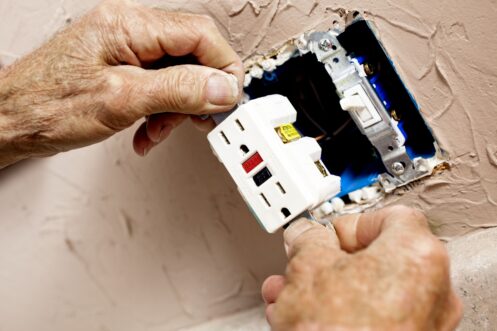
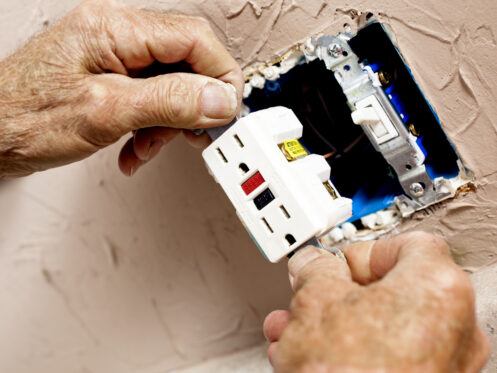
Adding GFCIs to these spaces can prevent injuries, especially in homes with children or older residents. The upgrade doesn’t usually require rewiring the whole house. In many cases, the electrician can swap out a regular outlet for a GFCI without major disruption.
You’ll also want to make sure any outdoor outlets have weatherproof covers that protect them when in use. This helps reduce the chance of ground faults during storms or while running tools outside. It’s a small upgrade that can make a big difference in safety.
What to Do if You Suspect a Ground Fault
If something keeps tripping, smells burnt or crackles when you plug it in, stop using it immediately. Don’t try to reset the outlet again and again. That just puts stress on the circuit.
Unplug everything from the affected outlets and test another device in a different location. If other circuits are still working normally, the issue is probably isolated. If lights flicker or you notice multiple outlets are out across the house, it might be a panel issue or a shared fault along the wiring.
Either way, consistent tripping means it’s time for repairs. Waiting can lead to overheating, failed appliances or even fire, in rare cases. You’ll save time and protect your system by letting a licensed electrician run a test before the problem spreads.
Schedule Your Ground Fault Diagnostic Appointment Today
Whether your ground fault comes from outdoor wiring, an overloaded bathroom outlet or aging kitchen connections, it’s not something to ignore. We handle GFCI replacement, panel inspections and upgrades for older systems that trip too easily or not at all. Book your ground fault repair or diagnostic appointment today with Potts Electric, and we’ll help you get back to safe, steady power.
Cody Potts
Owner
Cody Potts has over 10 years of experience in the electric industry and is the proud owner of Potts Electric.
Related Posts
5 Electrical Upgrades to Consider for the New Year
The end of the holiday season culminates in celebrations, plans, promises, and resolutions. Many New…
Addressing Common Holiday Electrical Issues
The holidays tend to put a lot of stress on a home's electrical system. From…
The Future of Renewable Energy for Missouri Homes
Missouri homeowners are moving into a crucial period in the evolution of residential energy. With…