
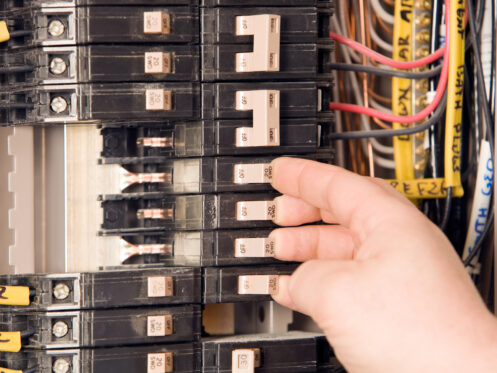
Are you buying a home? One of the most important steps before making that commitment is the home inspection and walkthrough. However, many buyers aren’t sure what to look for during this process, especially when it comes to the home’s electrical system. Learn how to make sure the home you’re buying is safe and functional by watching for these 10 electrical red flags.
1. Outdated Wiring System
Electricity started to become common in homes during the first half of the 20th century, and older homes often have their original wiring. These older wires and outlets weren’t made with the electrical demands of modern households in mind, which means they present many challenges and hazards. Old wiring also suffers from age-related deterioration and wear and tear. Outdated wiring can easily become overloaded and cause sparks, surges, or fires.
Here are some signs of outdated wiring to watch for:
- Aluminum wiring
- Two-prong outlets
- Home was built before 1970
- Cloth insulation around wiring
- Knob-and-tube wiring
These older types of wiring are likely not compliant with current electrical codes and need to be updated or replaced before you can safely move into your new home. Two-prong outlets lack the grounding wire, which is an essential safety element, and they’re not compatible with most modern plugs. Older cloth-insulated wires are another serious hazard because the decayed cloth can easily catch fire.
2. Flickering or Dimming Lights
If you notice that the lights flicker or slowly grow dimmer during a home inspection or walkthrough, the problem could be isolated to the lighting or a more serious red flag. Flickering or dimming lights are often a sign of home wiring that’s inadequate for the power load or beginning to fail. Plug additional items into the outlets to help find the problem. Flickering or dimming that gets worse when the power load increases is a sure sign of a wiring issue that goes beyond the light fixtures.
3. Not Enough Outlets
A common problem with older homes is a lack of electrical outlets. Homes in the past didn’t need as many outlets, but today’s families require plenty of places to plug in their many appliances and devices. From home offices and digital devices to kitchen gadgets, the demand for outlets is constantly growing. The minimum number of outlets in a modern home is two per wall, but more outlets are always welcome.
If the home you’re considering doesn’t have enough outlets, that’s not necessarily a deal breaker. At Potts Electric, we can add the outlets you need to power your life. We also install other modern necessities, like car chargers and smart home systems. With over a decade of experience providing electrical services in the St. Louis, MO area, you can count on us for all your residential electrical needs.
4. Tripping Circuit Breakers
Circuit breakers are an important part of a home’s electrical system that help prevent shocks, fires, and damage to appliances. However, circuit breakers shouldn’t trip frequently. A breaker that trips every few times you use the outlet is a sign that something is wrong. If the problem is only affecting one breaker, the breaker may simply need to be replaced. Multiple breakers that trip frequently indicate that the home’s wiring can’t handle its power load.
5. Crackling or Buzzing Sounds
Sounds are a normal part of operation for many things in a home, but an electrical system isn’t one of them. If you hear crackling or buzzing noises when turning appliances on or taking plugs in and out of outlets, it’s only a matter of time before a serious problem occurs. These sounds are indicative of loose connections and overloaded circuits that can lead to sparks and electrical fires.
6. Warm Spots Near Wiring
One thing that should never be warm or hot is wiring. If you notice warm spots around outlets or on walls with wiring behind them, serious trouble is just around the corner. Wiring becomes warm to the touch when it’s severely overloaded. This can happen for a variety of reasons, including inadequate or outdated wiring, deterioration, improper installation, or loose connections. When a home has overheated wiring, electricity usage should be reduced or discontinued until the problem is fixed.
7. Electrical Shocks
Shocks are one of the biggest safety hazards when it comes to electricity. An electric shock can range from minor discomfort to serious injury or death. Experiencing a shock from touching a switch or outlet during a home inspection is a major red flag. Although small shocks can sometimes be a normal occurrence due to static buildup, shocks that are moderate to severe or that happen consistently are a sure sign of faulty wiring. These homes may be unsafe to live in, especially for small children and the elderly.
8. Missing or Non-Functional GFCI Outlets
A ground fault circuit interrupter, or GFCI, is an important safety device that protects against electric shocks. Outlets with GFCI are typically required in wet areas like bathrooms, kitchens, and outdoors. Because GFCI is a relatively recent innovation, outlets in older homes may not include it. The good news is that upgrading regular outlets to GFCI is simple and inexpensive.
GFCI outlets can also fail over time, which means that testing GFCI outlets is an essential part of any home electrical inspection. Testing a GFCI outlet is a simple process. Plug a working electrical item into the outlet, turn it on, and press the reset button on the outlet. If the item shuts off, the GFCI is working properly.
9. Discoloration Around Outlets and Switches
If you notice discoloration around electrical outlets or switches, don’t dismiss it as simply dirt and grime. Darkening of outlets and switches can also be a sign of an underlying electrical problem. When wiring runs hot for a long period of time, outlet and switch covers and the surrounding areas of the wall can turn yellow, brown, or black. Discoloration on or around outlets and switches that won’t wipe away indicates an ongoing electrical problem.
10. Signs of Previous Electrical Fires
One of the biggest electrical red flags that can show up during an inspection is evidence of a previous electrical fire. A home that has experienced an electrical fire before is likely to have another one if the problem that caused it is not fixed. A lingering smell of smoke, melted outlets or switch covers, and burn marks on walls, floors, or ceilings are indicators of a previous electrical fire.
Electrical Safety Inspections You Can Trust
Whether you’re a new homeowner or shopping for your next home, Potts Electric offers electrical safety inspections to ensure the property’s wiring is up to date. Our experienced team of licensed electricians identifies potential hazards and issues before they turn into more serious problems. We also customize our inspections to fit your home’s age, size, and electrical demand. Are you ready for greater peace of mind when it comes to your home’s wiring? Contact us at Potts Electric in St. Louis today to schedule an electrical inspection.
