


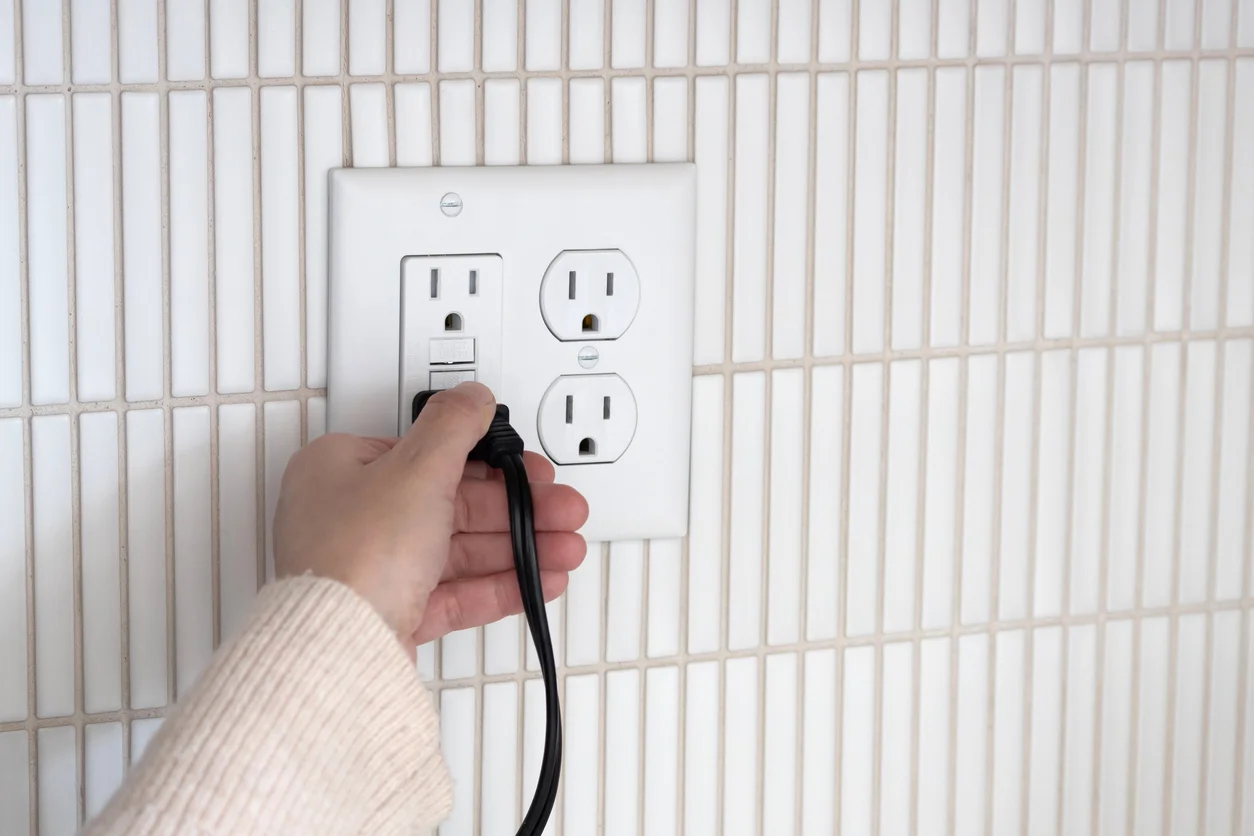
A dead outlet often catches homeowners off guard. One moment you're charging your phone or brewing coffee, and the next, the outlet has no power—even though the lights are still on and the circuit breaker doesn't appear to have tripped. It's easy to assume the outlet itself has failed, but that's not always the case.
After years of working in homes throughout the St. Louis area, we've found that a non-working outlet can point to several different issues. Sometimes it's as simple as resetting a safety device. Other times, it's an early sign of a loose electrical connection, aging wiring, or another problem hidden behind the walls.
Knowing what you can safely check yourself—and when it's time to call a licensed electrician—can help you avoid unnecessary frustration and catch electrical problems before they become more serious.
How Electricity Reaches Your Outlets
Most homeowners picture every outlet running directly back to the electrical panel, but residential wiring doesn't work that way.
Instead, several outlets are usually connected to the same branch circuit. Electricity leaves the breaker panel and travels from one outlet to the next before continuing farther along the circuit. Electricians often refer to these as upstream and downstream outlets.
Because of this setup, a problem at one connection can interrupt power to every outlet farther down the line.
For example, the outlet in your bedroom may stop working because of a loose connection in a hallway or living room outlet. The outlet you're trying to use isn't necessarily the source of the problem—it may simply be the first place where you notice the loss of power.
This also explains why a circuit breaker may still appear perfectly normal. Breakers are designed to respond to overloads and short circuits. A loose connection or broken neutral wire doesn't always create enough current for the breaker to trip, leaving homeowners wondering why an outlet suddenly stopped working.
Start With These Two Simple Checks
Before assuming you need electrical repairs, there are two quick checks that are safe for most homeowners and often solve the problem.
Check for a Tripped GFCI Outlet
Ground Fault Circuit Interrupter (GFCI) outlets are designed to reduce the risk of electrical shock. They're easy to recognize because they have "Test" and "Reset" buttons on the front.
Many homeowners don't realize that one GFCI outlet may protect several standard outlets located elsewhere in the home.
For example, a bathroom GFCI could also protect outlets in a nearby hallway. A garage GFCI might control outdoor receptacles, while a basement GFCI could protect another finished area of the home.
If an outlet suddenly loses power:
- Check bathrooms
- Look around kitchen countertops
- Inspect the garage
- Check unfinished basements
- Test outdoor receptacles
Press the Reset button firmly on every GFCI outlet you find.
If power returns, you've likely found the cause.
However, if the GFCI immediately trips again—or refuses to reset—it usually indicates another electrical issue that should be inspected by a licensed electrician.
See If the Outlet Is Controlled by a Wall Switch
Another surprisingly common explanation is a switched outlet.
Many older homes were built before ceiling lighting became standard in every room. Builders often wired part of an outlet to a nearby wall switch so homeowners could control a floor lamp without walking across the room.
These are commonly called half-hot outlets because:
- One receptacle remains powered all the time.
- The other only works when the wall switch is turned on.
If only half of the outlet has stopped working—or you notice a nearby switch that doesn't seem to control anything—try flipping the switch while testing the outlet.
You may discover the outlet is functioning exactly as it was designed.
If several nearby outlets have lost power together, however, the issue is likely somewhere else in the electrical circuit.
When the Problem Is Hidden Behind the Walls
If resetting nearby GFCIs and checking wall switches doesn't restore power, the issue often lies inside the wiring itself.
While Missouri homeowners may legally perform certain electrical work on their own homes, diagnosing hidden wiring problems involves working around energized electrical components. That's why these situations are usually best left to a licensed electrician.
Loose Back-Stab Connections
One of the most common causes of dead outlets involves something homeowners never see.
Many outlets are installed using back-stab connections, where wires are pushed into spring-loaded openings on the back instead of being secured beneath side terminal screws.
Although this installation method saves time, those internal springs can weaken over the years.
Normal heating and cooling cycles, vibration, and everyday electrical use gradually loosen the connection. Eventually, electricity may stop flowing through that point, causing one or several downstream outlets to lose power.
The outlet with the loose connection may still appear to work normally, making the actual source of the problem difficult to locate without proper testing equipment.
Internal Outlet Wear
Outlets don't last forever.
Every time a plug is inserted or removed, the metal contacts inside the receptacle experience a small amount of wear. After years of use, those contacts can become loose, damaged, or overheated.
Some warning signs include:
- Plugs falling out easily
- Intermittent power
- An outlet that only works when the cord is held a certain way
- Complete loss of power
Because much of this damage occurs inside the receptacle, the outlet may look perfectly normal from the outside while no longer making a safe electrical connection.
Replacing a worn outlet is generally straightforward for a qualified electrician, but it's also important to determine whether the outlet failed on its own or if another wiring issue caused the damage.
Aluminum Wiring in Older Homes
Homes built during the mid-1960s through the 1970s may contain aluminum branch wiring instead of copper.
Aluminum expands and contracts more than copper when electrical current passes through it. Over time, that movement can loosen electrical connections, leading to:
- Flickering lights
- Intermittent power
- Dead outlets
- Warm outlets
- Electrical arcing
Special connectors and repair methods are required when working with aluminum wiring. If your home contains aluminum branch circuits and outlets begin losing power unexpectedly, it's best to have the wiring evaluated rather than attempting a DIY repair.
Warning Signs You Shouldn't Ignore
Not every dead outlet signals an emergency, but some symptoms suggest a more serious electrical problem that deserves immediate attention.
If you notice any of the following, stop using the outlet and avoid plugging anything into it until it's been inspected.
The Outlet Feels Warm or Hot
A phone charger or power adapter may feel slightly warm during normal use, but the outlet itself should never become hot to the touch.
Heat usually points to a loose electrical connection or failing internal components. Left unaddressed, excess heat can damage the outlet and surrounding wiring.
You See Scorch Marks or Discoloration
Brown, black, or yellow marks around the outlet faceplate aren't simply cosmetic. They often indicate that excessive heat or arcing has occurred in the past.
Even if the outlet still works occasionally, visible burn marks are a sign that something isn't operating safely.
You Notice a Burning Smell
An outlet that smells like burning plastic, melting insulation, or even has a faint "fishy" odor should never be ignored.
These odors can develop when insulation begins breaking down from excessive heat. Continuing to use the outlet increases the risk of further damage.
You Hear Buzzing or Crackling
Electrical systems should operate quietly.
Buzzing, sizzling, or crackling sounds often indicate electricity is arcing across a loose connection rather than flowing through a secure one. Electrical arcing can generate extremely high temperatures in a very small area, making prompt repairs important.
If you notice any combination of heat, burning odors, unusual noises, or visible damage, discontinue using the outlet and arrange for a professional inspection as soon as possible.
Why Older St. Louis Homes Experience This More Often
St. Louis is known for its beautiful historic neighborhoods, but older homes often come with older electrical systems.
Many houses built before the 1950s still contain portions of their original wiring, while homes built during the 1960s and 1970s may have aluminum branch wiring. Over the years, renovations, additions, and partial electrical upgrades can leave homes with multiple generations of wiring working together.
That isn't automatically unsafe, but every splice, connection, and previous repair creates another possible point where electrical problems can develop over time.
Local conditions can also contribute. Missouri's seasonal temperature swings cause wiring and electrical connections to expand and contract year after year. Basements and exterior walls may also experience higher humidity levels, which can gradually affect older electrical components.
If you've noticed multiple outlets failing over time, lights flickering, or GFCIs that repeatedly trip, it may be worth scheduling a broader electrical inspection rather than treating each issue as an isolated repair.
What You Can Safely Check—and When It's Time to Call an Electrician
A dead outlet doesn't always mean something major has failed.
In many cases, checking nearby GFCI outlets or discovering a switched receptacle solves the mystery in just a few minutes.
However, if those simple steps don't restore power—or if you notice signs of overheating, buzzing, burning odors, or repeated electrical issues—it's time for a licensed electrician to investigate. Electrical troubleshooting often requires specialized testing equipment to locate loose connections, damaged wiring, or failing components hidden behind finished walls.
Addressing the underlying cause early can help prevent recurring outages and reduce the likelihood of more extensive repairs later.
Schedule Professional Outlet & Electrical Troubleshooting
When an outlet suddenly stops working, getting the right diagnosis is more important than simply replacing the receptacle. Hidden wiring issues, aging electrical components, or loose connections can affect multiple parts of your home's electrical system.
Whether you're dealing with a single dead outlet or recurring electrical problems, Potts Electric provides professional outlet repairs, electrical troubleshooting, wiring repairs, and electrical safety inspections for homeowners throughout the St. Louis area.
Wondering why an outlet suddenly stopped working? Get answers before a small issue becomes a bigger repair. Call (636) 322-2006 today to schedule an inspection or contact our team to request your appointment.